Instant Coffee Extraction: Common Causes of Yield Variation in Soluble Coffee Plants
Yield variation in instant coffee production is rarely caused by one isolated fault. More often, it is the result of several small shifts stacking together: roast development moving slightly, grind distribution widening, extractor balance drifting, solids handling changing, or raw material arriving with a different physical structure than the last lot.
For a coffee processing plant, that variation shows up commercially as unstable soluble solids recovery, inconsistent extract viscosity, filtration pressure changes, evaporator loading swings, and rework pressure on operators. The goal is not only to increase extraction yield. The goal is to keep yield predictable enough that the plant can plan throughput, energy demand, and product quality with confidence.
Parchline Catalytics works with soluble coffee processors looking for process-supporting enzyme solutions and validation support. As an enzyme supplier for coffee processing, we look at yield variation from the plant floor upward: where resistance forms, where extract slows, where solids trap value, and where batch data stops matching expectations.
Why instant coffee yield variation matters
In soluble coffee manufacturing, extraction yield affects more than raw material efficiency. It influences the performance of the entire downstream line.
When yield fluctuates, plants may see:
- Variable extract concentration leaving the extraction train
- Changes in viscosity that affect pumping and heat transfer
- Filtration or centrifugation instability
- Higher load on evaporation and concentration stages
- Inconsistent dryer feed behavior
- Wider batch-to-batch quality variation
- More frequent operator intervention and troubleshooting
A small extraction-side issue can therefore become a production planning issue. Stable yield supports stable schedules.
1. Roast profile drift changes extractability
Roasting sets up the physical and chemical structure that extraction must work through. Even when green coffee specifications look similar, small roast profile shifts can change porosity, brittleness, soluble release, and fines generation.
Underdeveloped roast structure
If coffee is insufficiently developed for the intended extraction program, soluble release may be slower and less complete. The bed may resist extraction longer, requiring more time, more severe conditions, or accepting lower recovery.
Operational signs can include:
- Lower early-stage soluble release
- More extraction imbalance across vessels
- Greater sensitivity to residence time
- Higher residual value in spent grounds
Overdeveloped or uneven roast
A more aggressive or uneven roast can create the opposite problem: high fines, fragile particles, and extract that carries more suspended material into downstream separation. Apparent extraction may improve in one area while filtration and extract handling deteriorate elsewhere.
Possible plant-floor signs include:
- More fine solids in extract
- Faster pressure rise in filtration
- More variable slurry behavior
- Darker or harsher extract notes when process severity rises
The key point: roast profile is not only a flavor parameter. It is a processability parameter.
2. Grind distribution affects flow, contact, and retained value
Grind size is one of the most direct drivers of extraction consistency. A narrow, controlled grind distribution helps the extraction train behave predictably. A wide distribution creates zones that extract at different rates.
Too many coarse particles
Coarse material can leave extractable value inside the particle because liquid penetration and soluble release are slower. Operators may respond with more severe extraction conditions, but that can over-extract smaller particles and increase downstream burden.
Too many fines
Excess fines can increase bed resistance, elevate suspended solids, and make filtration less stable. Fines can also move through the system unevenly, creating local pressure effects and inconsistent extract clarity.
What to monitor
Processing teams should track grind distribution alongside extraction performance, not separately from it. Useful indicators include:
- Extract concentration by stage or vessel
- Differential pressure trends
- Filtration cycle time
- Centrifuge load and solids discharge behavior
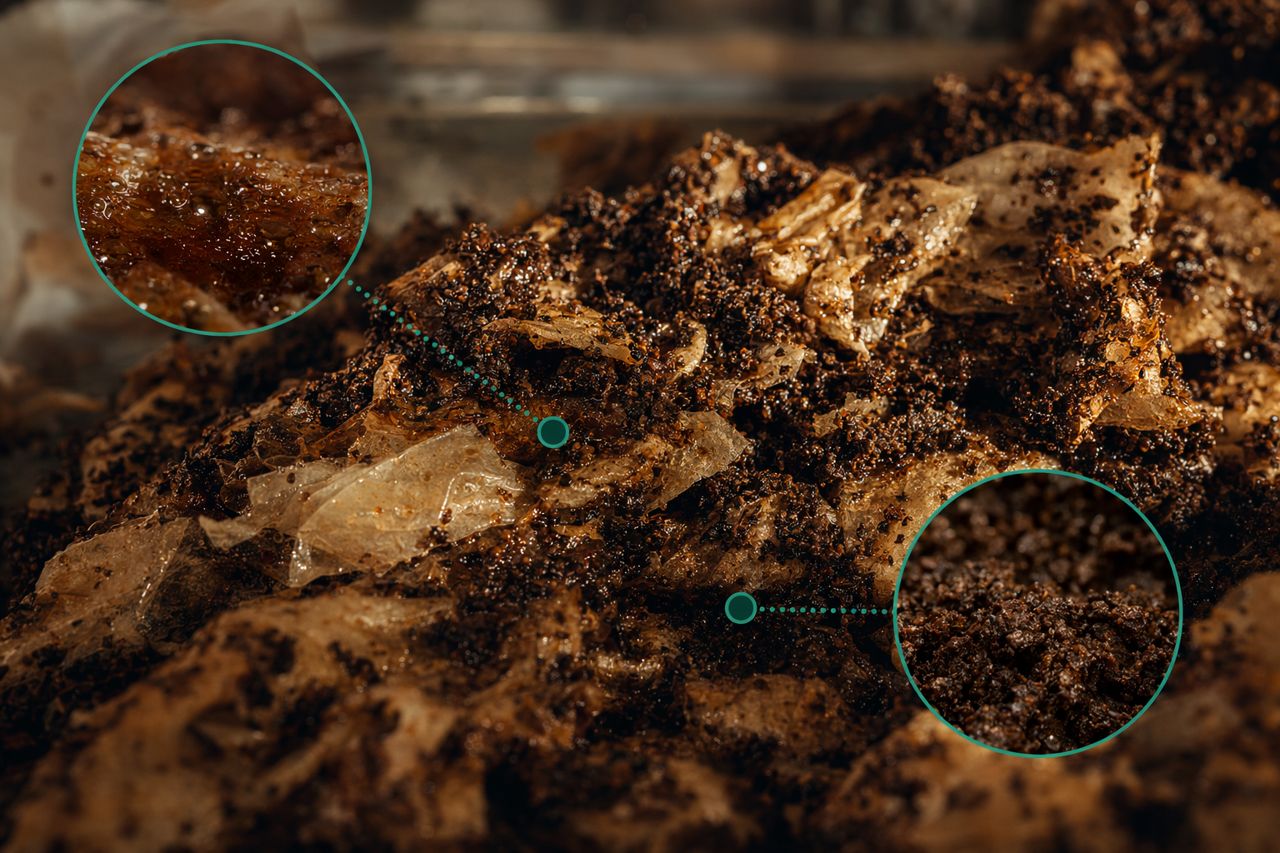
- Spent grounds consistency
Grind control is not just a milling target. It is a yield-control tool.
3. Extraction train conditions can create hidden imbalance
A soluble coffee extraction train may appear stable from headline temperature and flow settings, while individual vessels or stages are not performing equally. Yield variation often begins in these internal imbalances.
Temperature profile and residence time
Temperature influences solubilization, viscosity, diffusion, and extract character. If the profile is not aligned with the raw material and grind, the plant may see either incomplete extraction or extract quality stress.
Residence time is equally important. Too little contact can leave yield behind. Too much severity can increase downstream handling issues, especially where suspended solids and viscosity rise.
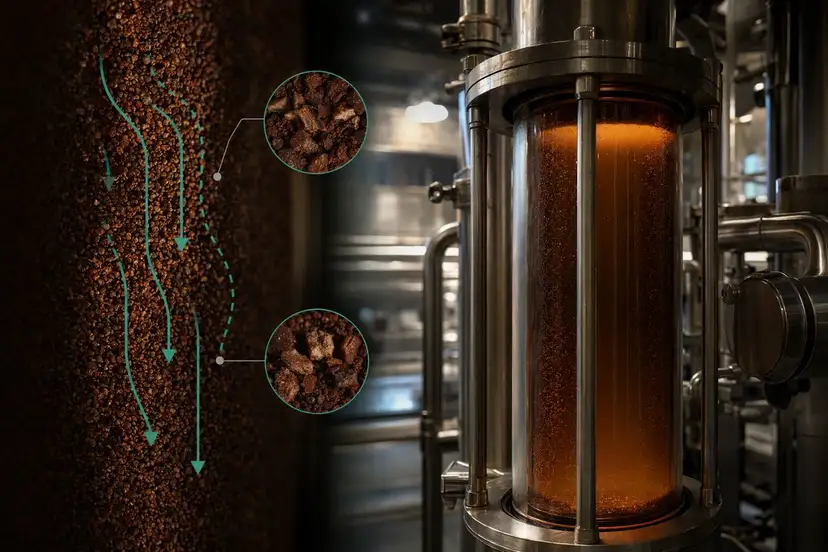
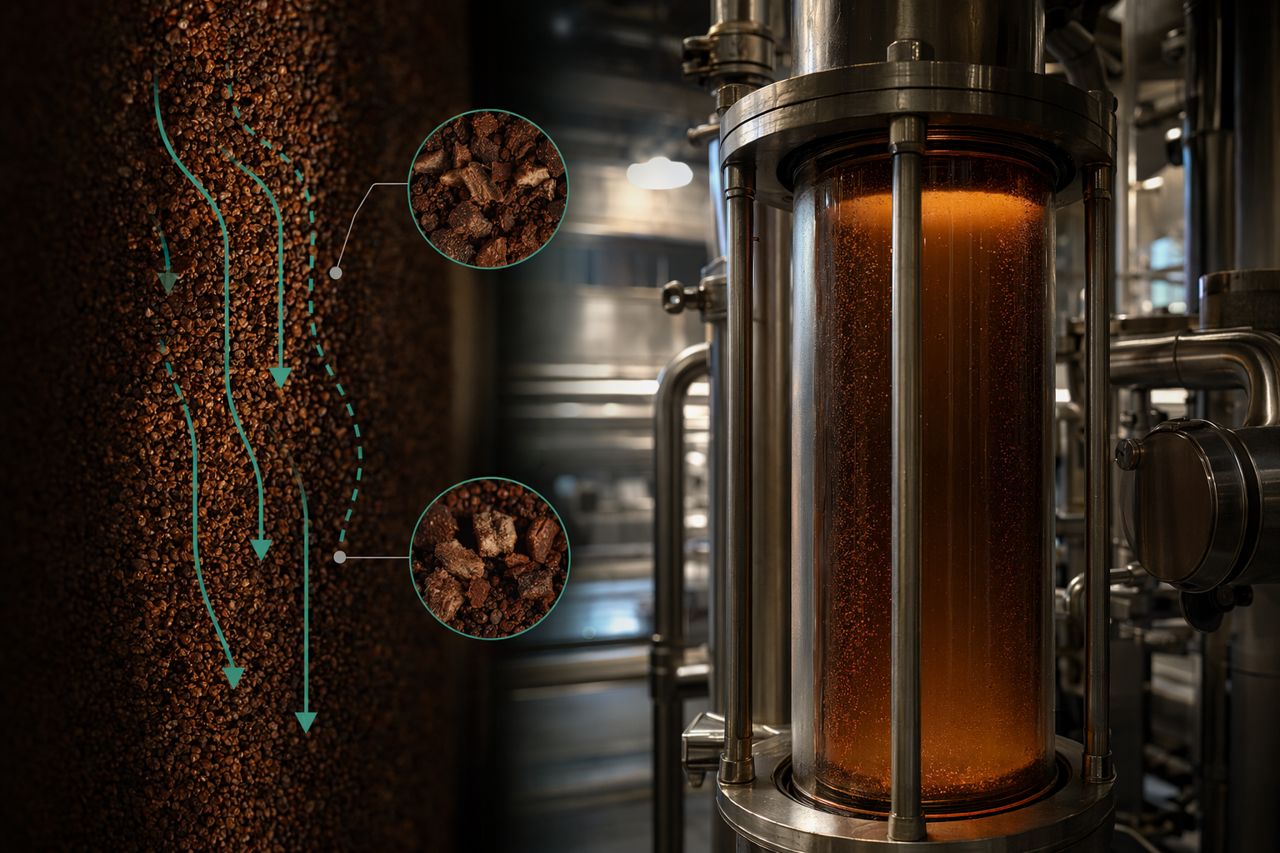
Flow distribution and channeling
Uneven flow through packed material can leave some zones under-contacted while other zones are over-contacted. Channeling can be difficult to see directly, but it often appears as unstable extract concentration, pressure movement, or inconsistent spent grounds.
Stage-to-stage control
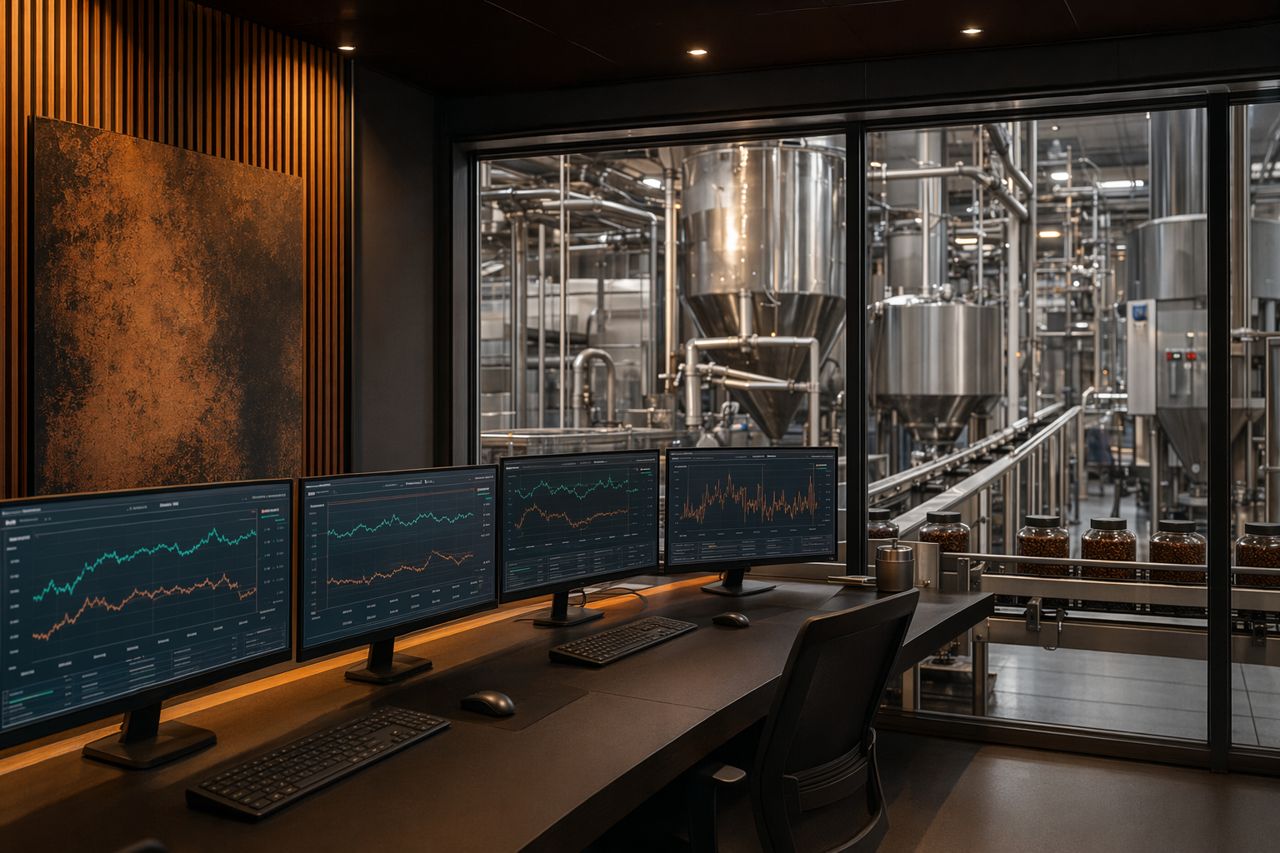
Yield variation can also come from stage imbalance: one stage doing too much work, another contributing less, or discharge timing shifting solids behavior. This is where trend data matters. Looking only at total line output can hide the source of variation.
4. Extract viscosity can limit recovery and throughput
Viscosity is both a symptom and a constraint. When extract viscosity increases, pumping, heat transfer, filtration, and concentration can all become more difficult. Operators may be forced to slow the line, adjust dilution, or accept less efficient recovery.
Common contributors include:
- Raw material polysaccharide variation
- Roast and grind changes
- High suspended solids carryover
- Process severity that increases extract load
- Inefficient breakdown of plant-cell-wall-derived material
This is one area where enzyme solutions may support process consistency, depending on plant objectives and validation results. The commercial target is practical: improved flow behavior, more stable filtration, and a more manageable extract stream without disrupting the plant’s quality requirements.
5. Filtration and separation can make yield look unstable
Not all yield variation originates inside the extraction vessels. Separation performance can change how much recovered soluble material is practically available for concentration and drying.
If filtration slows or centrifugation becomes unstable, a plant may experience:
- Higher retained extract in wet solids
- Increased hold-up in process equipment
- Lower usable extract transfer
- More cleaning or stoppage events
- Greater variation in feed to evaporation
In these cases, the extraction train may be producing value, but the separation system is not consistently moving that value forward.
6. Extract handling after extraction matters
Once extract leaves the extraction train, handling conditions can continue to affect consistency. Holding time, temperature, solids suspension, and transfer shear can all influence how the stream behaves.
Areas to review include:
- Tank residence time before evaporation
- Settling or stratification in holding vessels
- Pump selection and operating point
- Line restrictions and dead zones
- Cleaning frequency and residue formation
A plant can lose predictability after extraction if the extract stream is not handled as a controlled intermediate.
7. Raw material variation is unavoidable, but it can be managed
Coffee is an agricultural raw material. Origin, variety, crop year, processing method, moisture, storage history, and defect profile can all affect extraction behavior.
For soluble coffee plants, the important question is not whether raw material varies. It will. The question is whether the plant has a system to translate incoming variation into process settings and support strategies.
Practical controls include:
- Lot-level tracking of extraction performance
- Roast and grind adjustment by raw material behavior
- Spent grounds review for retained value
- Viscosity and filterability trending
- Validation trials for process aids where needed
Raw material variation becomes less disruptive when the plant can identify the pattern early and respond before throughput is affected.
Where enzyme support fits into yield control
Enzyme solutions are not a replacement for roast control, grind discipline, or extraction train maintenance. They are a process tool that can be evaluated where plant-cell-wall material, viscosity, retained extract, or filterability are limiting recovery.
For coffee processing plants, the strongest enzyme programs are built around measurable operational objectives, such as:
- Reducing extract viscosity to support stable transfer
- Improving filterability and separation consistency
- Supporting more complete release of soluble material
- Lowering retained value in spent solids
- Improving batch-to-batch processing behavior
- Reducing avoidable downtime linked to flow or filtration instability
The right approach depends on the raw material, process configuration, residence time, temperature window, and downstream quality targets. Validation should be plant-specific and commercially grounded.
A practical troubleshooting sequence
When yield variation increases, processing teams can avoid guesswork by moving through a structured review.
Step 1: Confirm the variation is real
Check sampling points, concentration measurement consistency, mass balance assumptions, and data timing. A measurement issue can look like a process issue.
Step 2: Compare roast and grind data
Review roast curves, color targets, post-roast conditioning, grinder condition, and particle distribution. Look for changes that align with the start of yield instability.
Step 3: Review extraction train balance
Compare vessel behavior, pressure trends, flow distribution, stage concentration, residence time, and discharge consistency.
Step 4: Check separation and extract handling
Evaluate filtration cycle time, centrifuge behavior, suspended solids, transfer losses, holding conditions, and evaporator feed stability.
Step 5: Link findings to raw material lots
Map performance against origin, blend, storage time, moisture, and incoming physical characteristics.
Step 6: Evaluate targeted process support
Where viscosity, retained extract, or filterability remain limiting factors, assess whether an enzyme solution can improve consistency under real plant conditions.
What Parchline Catalytics brings to the conversation
Parchline Catalytics supports coffee processors with enzyme solutions built around operational outcomes, not generic claims. Our work is focused on practical plant questions:
- Where is yield being left behind?
- Is viscosity limiting throughput?
- Is filtration controlling the production rate?
- Is raw material variation causing unstable batches?
- Can the line validate improvement without disrupting quality targets?
We help processing teams review the application fit, define trial objectives, and structure validation around plant-floor metrics that matter to production and procurement teams.
Request a quote for coffee processing enzyme support
If your soluble coffee plant is working through extraction yield variation, viscosity constraints, filtration instability, or raw material variability, Parchline Catalytics can help evaluate a targeted enzyme approach.
Use the on-site request a quote form to share your process objective, raw material type, and the production constraint you want to address. Our team will respond with a commercially direct recommendation for next steps.