Soluble Coffee Plant Upgrades | Enzyme Supplier for Coffee Processing
A plant-floor guide to soluble coffee upgrades across extraction, concentration, drying, filtration, viscosity control, and yield validation.
Request pricing A plant-floor guide to soluble coffee upgrades across extraction, concentration, drying, filtration, viscosity control, and yield validation.
Request pricingSoluble coffee plants are rarely limited by one machine in isolation. A higher extraction rate can overload clarification. Lower viscosity can raise evaporator capacity, but may expose dryer feed variability. A new filtration step can reduce downtime, but may shift the economic constraint back to extractor scheduling or aroma recovery.
For processing managers, the useful question is not simply “How do we increase yield?” It is: where will the next constraint appear after the first improvement is made?
Parchline Catalytics supports coffee processors evaluating enzyme-enabled improvements across extraction, viscosity reduction, filtration, concentration, and downstream consistency. As an enzyme supplier for coffee processing, we focus on practical plant outcomes: more recoverable solids, steadier flow, cleaner separation, less unplanned downtime, and validation data that helps engineering and quality teams make confident decisions.
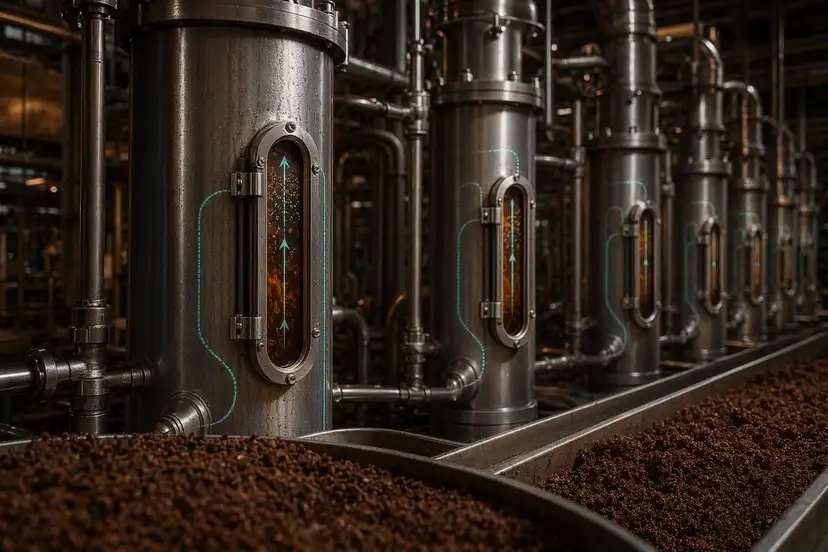
A typical soluble coffee operation connects multiple high-load process areas:
Each stage protects the next one. Extraction determines solids loading and composition. Clarification determines how much suspended material reaches concentration. Viscosity affects pumping, heat transfer, membrane behavior, and dryer feed control. Dryer performance depends not only on inlet temperature and atomization, but also on the physical behavior of the feed.
This is why plant upgrades should be evaluated as a system, not as a single-point intervention.
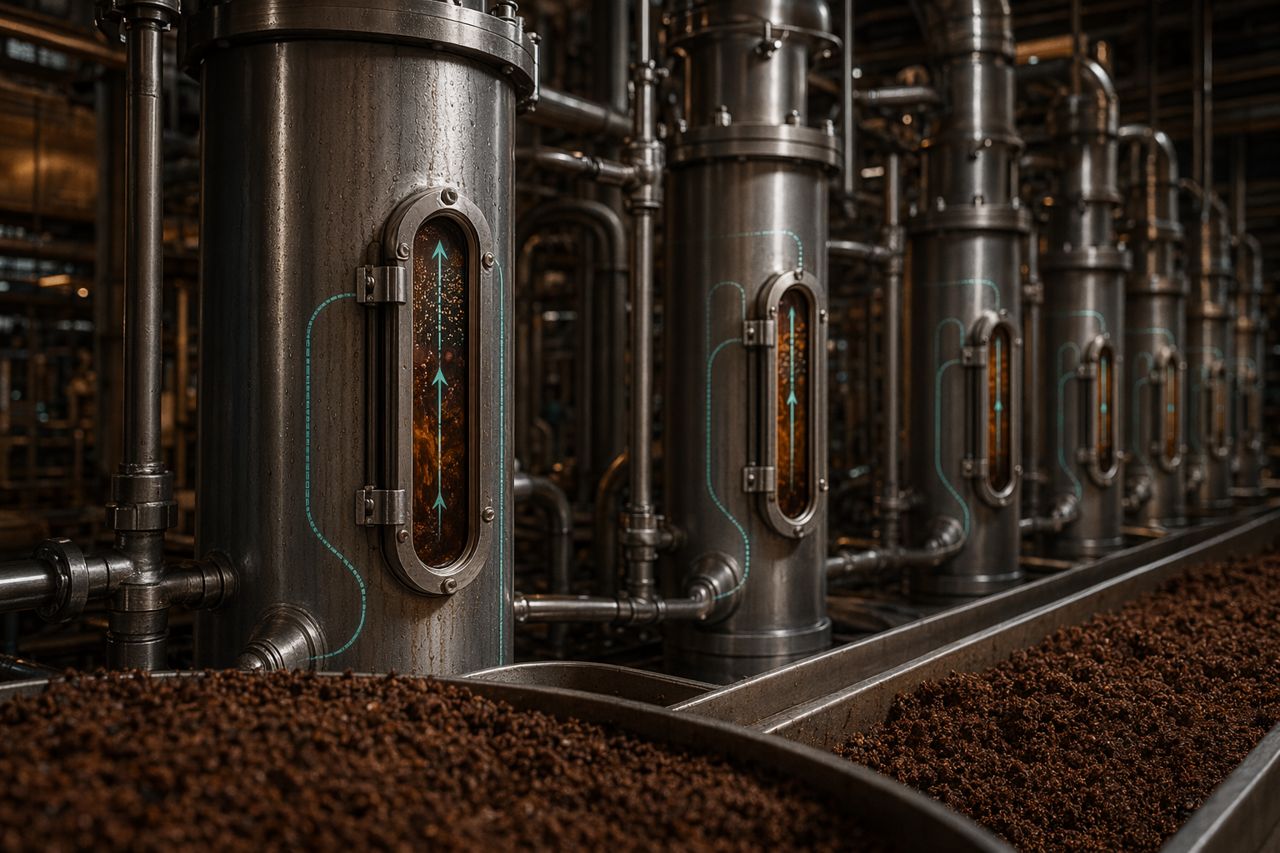
Extraction is the obvious starting point for many soluble coffee projects. The commercial driver is clear: recover more soluble solids from the same raw material, or maintain output with less extraction pressure on the plant.
However, additional recovered material changes the load downstream. Depending on coffee type, roast profile, grind distribution, extraction design, and residence time, higher recovery can also change:
Enzyme solutions can support extraction by helping unlock plant cell-wall-associated material and improving the release of soluble fractions. The value is not the enzyme addition itself. The value is whether the extraction section delivers more usable solids while maintaining a downstream profile the plant can process reliably.
For that reason, any extraction upgrade should be paired with measurements that matter to production:
A yield gain that creates frequent filter blinding or unstable drying is not a complete upgrade. It is a constraint transfer.
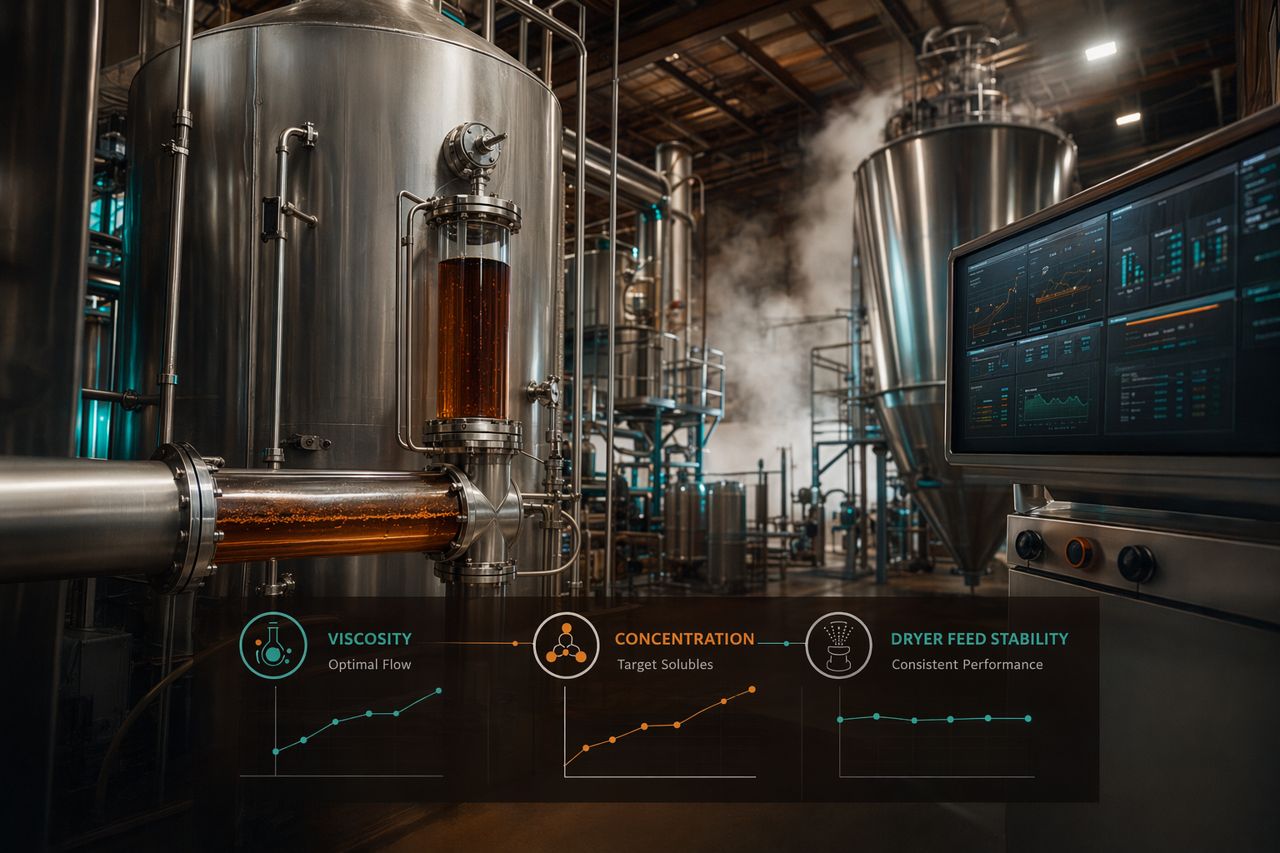
Viscosity is one of the hidden variables that determines whether a soluble coffee line runs smoothly. It influences pump loading, heat exchange, membrane flux, evaporator behavior, spray drying atomization, and line cleaning.
High viscosity can show up as:
In coffee processing, viscosity is affected by dissolved solids, suspended fines, extraction conditions, polysaccharide behavior, roast-related changes, and thermal history. Enzyme-assisted viscosity management can help reduce resistance in the liquid phase, supporting more predictable handling before concentration or drying.
The strongest business case is often not a dramatic equipment change. It is a steadier line:
For plants already near hydraulic or thermal limits, viscosity reduction may create effective capacity without immediately adding major equipment.
Clarification is often treated as a housekeeping step. In practice, it protects some of the most expensive and sensitive parts of the soluble coffee line.
Poor separation performance can increase load on:
When fine solids, colloids, or unstable extract structures remain in the stream, the plant may see shorter filter runs, pressure rise, inconsistent clarity, and higher cleaning frequency. Even small disruptions can accumulate into significant downtime over weeks of production.
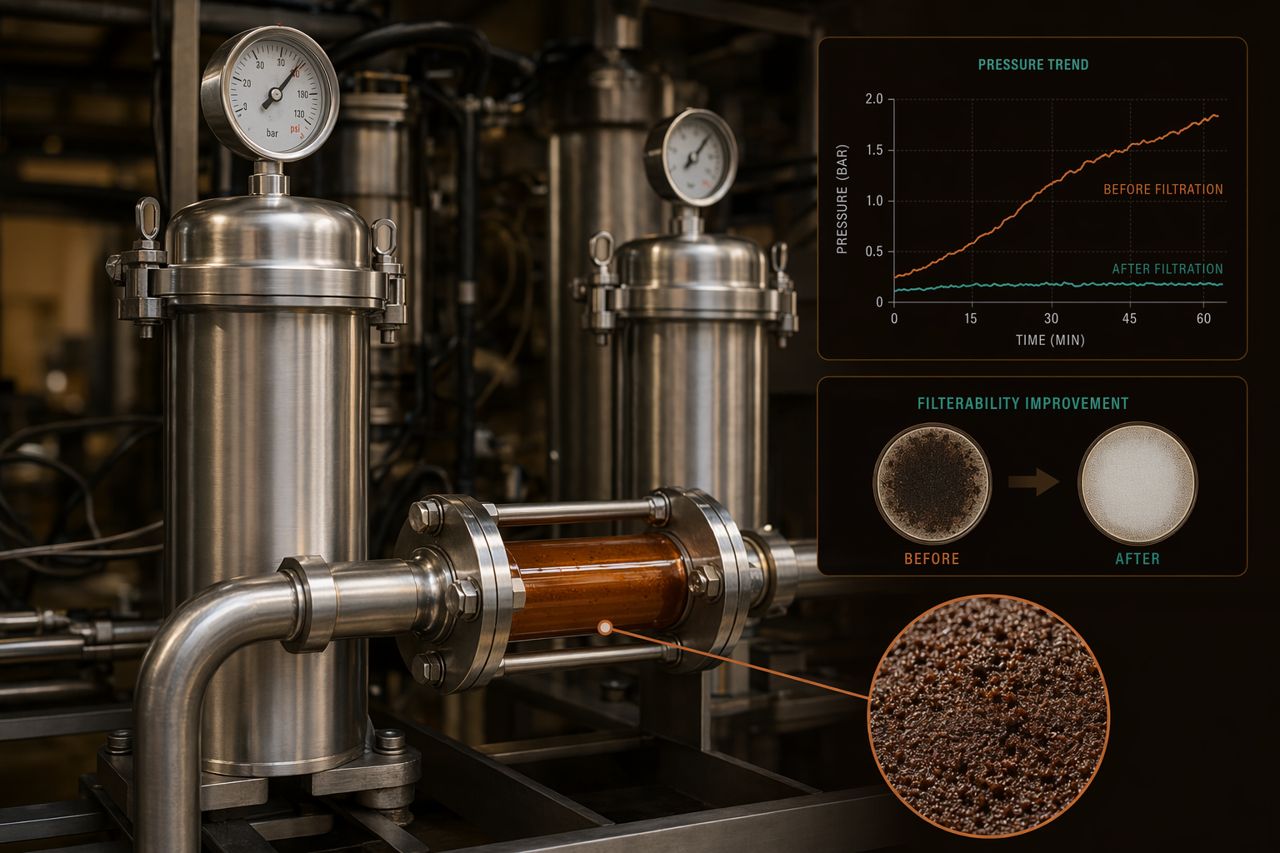
Enzyme-supported process conditioning may improve filterability by altering components that contribute to viscosity, suspended load interaction, or extract structure. The target is not cosmetic clarity alone. The target is operational protection: longer run windows, fewer sudden pressure events, and more stable feed to concentration and drying.
A practical filtration evaluation should include:
In many plants, clarification improvements are the difference between a theoretical yield increase and a production-ready yield increase.
Evaporation and membrane concentration convert upstream extract behavior into energy use, residence time, fouling risk, and capacity. A small difference in viscosity or particulate behavior can have an outsized effect at higher solids.
Common concentration constraints include:
If extraction is upgraded without considering concentration, the plant may recover more solids but struggle to concentrate them efficiently. If viscosity is reduced before concentration, the same installed assets may run with improved flow, better heat transfer behavior, or more consistent membrane performance.
The engineering question is simple: does the upgraded extract remain manageable at the target concentration?
That question should be answered with plant-relevant trials, not only bench observations. The correct validation path depends on the line design, but the decision metrics should remain operational: throughput, fouling trend, energy pressure, cleaning time, concentrate handling, and final product consistency.
Spray drying and freeze drying are often viewed as downstream finishing steps, but they expose weaknesses created earlier in the process. Dryer performance depends heavily on feed concentration, viscosity, suspended material, thermal history, and atomization behavior.
When feed is inconsistent, the dryer may experience:
Enzyme-enabled improvements upstream can support drying by improving the consistency and handling of the feed. For spray drying, that may mean more stable atomization and fewer deposit-related interruptions. For freeze drying, it may mean more consistent extract preparation before freezing and sublimation.
The important point: drying upgrades do not begin at the dryer. They begin with the behavior of the extract entering the dryer feed system.
Every successful improvement changes the plant balance.
If extraction yield rises, clarification may become the constraint. If clarification improves, concentration may become the constraint. If concentration runs faster, dryer feed preparation or powder handling may become the constraint. If viscosity is reduced, the plant may discover that scheduling, tank capacity, or CIP timing is now the limiting factor.
This is not a failure. It is how manufacturing systems behave.
The risk is upgrading one area without mapping the next constraint. Parchline Catalytics helps teams evaluate enzyme solutions with that system view, so a process improvement can be translated into a controlled production gain.
For soluble coffee plants, enzyme projects should be judged by measurable production outcomes. The validation plan should be built before the trial, agreed with operations and quality, and designed around real decision points.
Typical validation focus areas include:
The strongest projects create a clear before-and-after picture. They also define operating windows, not just best-case trial results.
Enzyme solutions may be evaluated at several points, depending on the plant objective:
Used where the goal is to recover more soluble material from roasted and ground coffee while keeping downstream handling under control.
Used where thick extract limits pumping, filtration, concentration, or dryer feed stability.
Used where fine material interaction, extract structure, or liquid-phase behavior causes short filter cycles or pressure instability.
Used where the plant needs a more manageable extract before evaporation or membrane concentration.
Used where the commercial objective is less variability between batches, shifts, or raw material lots.
The right solution depends on raw coffee characteristics, roast level, grind profile, extraction system, thermal exposure, solids target, and downstream configuration. There is no responsible one-size-fits-all recommendation.
A soluble coffee upgrade should be valued across three connected areas:
In many plants, the most attractive return does not come from one headline metric. It comes from stacking modest improvements across the line: slightly higher recovery, fewer interruptions, steadier concentration, and more consistent dryer operation.
This is where enzyme solutions can be commercially relevant. They can help change the physical behavior of the extract without replacing core installed assets, provided the project is validated correctly.
Before selecting any enzyme solution, plant teams should align on the following:
These questions prevent a technical trial from becoming disconnected from production reality.
Parchline Catalytics supplies enzyme solutions and technical support for coffee processing plants evaluating extraction, viscosity, filtration, concentration, and drying improvements. We work with plant teams to define the bottleneck, select the correct enzyme approach, support trial planning, and help convert results into a production decision.
If your soluble coffee line is facing yield pressure, filter instability, concentration limits, dryer feed variability, or avoidable downtime, we can help assess where enzyme technology may fit.
Request a quote through the on-site contact form and share your process objective, coffee stream, current constraint, and desired production outcome. Our team will respond with a practical next step for evaluation.
Tell us your application and volume — we reply with pricing and lead time.