From Cherry Reception to Drying Patio: A Practical Map of Wet Mill Quality Control Points
Wet mill quality control is not one inspection at the end of the line. It is a sequence of controlled decisions: what enters the plant, how quickly it moves, how consistently mucilage is removed, how clean the water loop remains, and whether drying starts from a uniform condition.
For processing managers, the goal is straightforward: protect cup-critical quality while improving throughput, reducing rework, and avoiding downtime caused by blocked channels, overloaded washers, inconsistent fermentation, or uneven drying loads.
This map is written as a plant-floor reference for coffee processing teams. It can also help technical buyers define where process aids, including enzyme-supported mucilage management, should be validated when seeking an enzyme supplier for coffee processing.
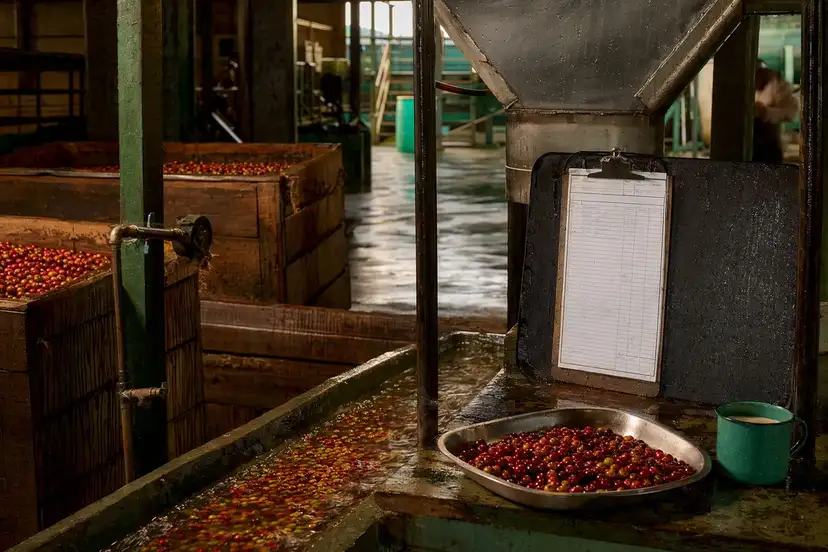
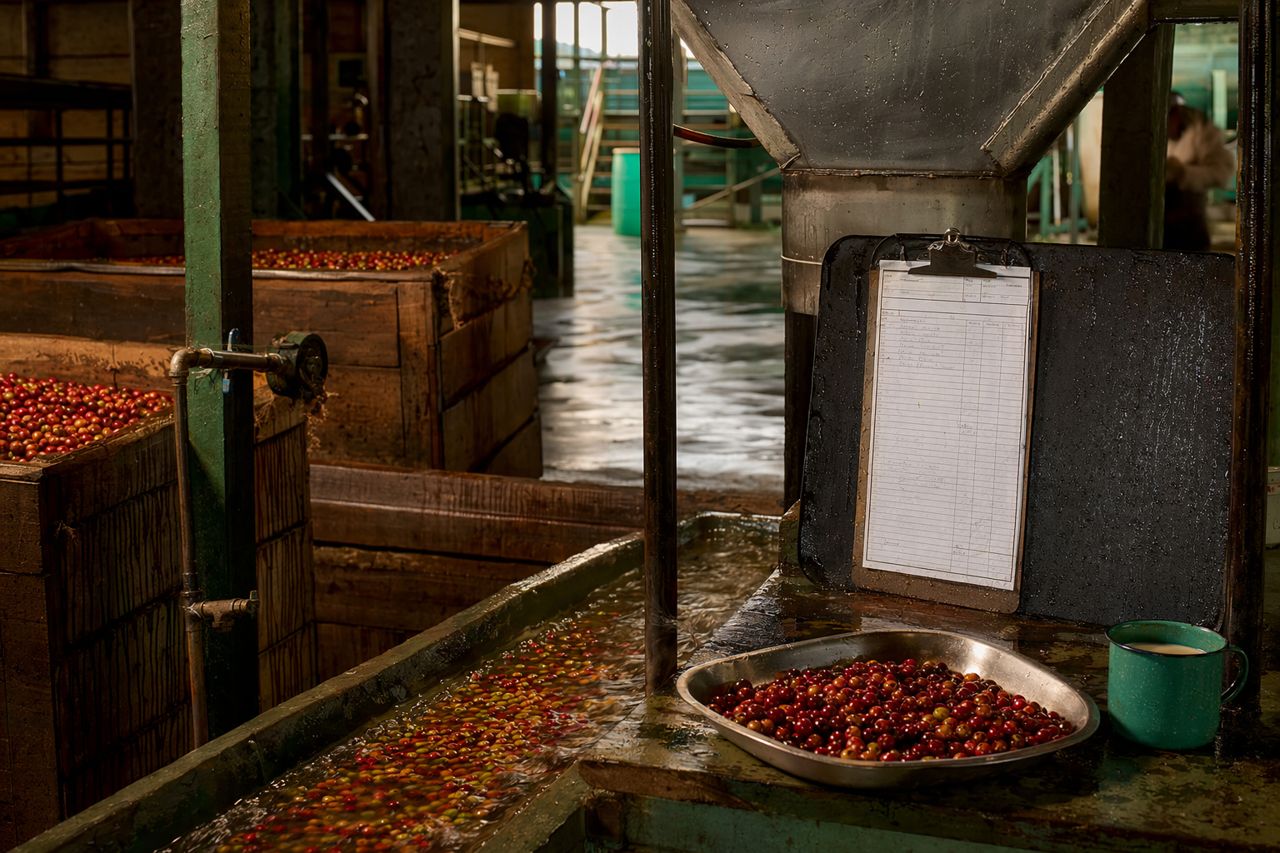
1. Cherry reception: control the raw material before the line is committed
Cherry reception sets the operating window for the entire wet mill. Once mixed-quality fruit is accepted into a batch, downstream steps can only reduce the damage, not erase it.
Key control points
- Lot identity: farm, block, variety if relevant, harvest date, delivery time, and transport condition.
- Ripeness profile: percentage of underripe, overripe, dry, insect-damaged, and mechanically damaged fruit.
- Foreign material: stones, sticks, leaves, metal fragments, packaging debris.
- Temperature and hold time: warm, delayed fruit accelerates uncontrolled microbial activity.
- Floaters: record the level of low-density cherry removed during flotation.
Plant-floor checks
| Check |
Why it matters |
Action if out of range |
| Visual ripeness sort |
Predicts fermentation behavior and defect risk |
Segregate or downgrade lot |
| Floatation removal |
Reduces low-density and damaged material |
Increase removal pass or isolate batch |
| Reception delay |
Limits uncontrolled pre-fermentation |
Prioritize processing or document risk |
| Lot traceability |
Supports claims, recalls, and troubleshooting |
Hold batch until paperwork is complete |
Practical note
If the wet mill is running high-throughput intake, reception QC should not depend only on end-of-day sampling. Short, repeated checks during peak delivery windows are more useful than one large composite inspection.
2. Water intake and flotation: protect the first contact medium
Water is not neutral in wet processing. It carries heat, solids, microorganisms, and dissolved load. Water quality affects flotation efficiency, mucilage behavior, fermentation predictability, and equipment cleanliness.
Key control points
- Incoming water clarity and odor
- Sediment load
- Water reuse ratio
- Organic load build-up in recirculation tanks
- Flow stability into flotation channels
Checklist
- Confirm screens and settling points are clear before intake starts.
- Remove accumulated pulp and skins before they become a microbial source.
- Track water loop turbidity visually or by site-approved instrumentation.
- Avoid using heavily loaded recycle water for quality-sensitive lots unless validated.
- Keep flotation flow even; surging flow reduces separation reliability.
3. Depulping: maintain mechanical precision
Depulping quality determines how much fruit tissue moves forward with the parchment coffee. Poor adjustment increases broken parchment, retained pulp, mucilage inconsistency, and washer load.
Key control points
- Drum or disc setting relative to cherry size distribution
- Feed rate stability
- Pulp separation efficiency
- Broken bean or cut parchment incidence
- Residue carryover into fermentation or demucilage channels
Watch for these signals
- Rising pulp carryover after a change in cherry size
- More broken parchment during higher throughput
- Back-pressure or uneven feed into the depulper
- Excess pulp in the next tank or channel
- Operators increasing water flow to compensate for mechanical misalignment
Corrective actions
- Stop and check clearance settings.
- Inspect screens, belts, and feed mechanisms.
- Confirm cherry size spread from the current delivery.
- Reduce feed rate temporarily if mechanical separation is unstable.
- Record the adjustment with time, lot, operator, and observed result.
4. Mucilage management: define what clean means
Mucilage removal is one of the most important quality-control areas in a wet mill. Too little removal can create fermentation instability and drying problems. Excessive mechanical action can damage parchment and increase water use.
Wet mills typically manage mucilage through fermentation, mechanical demucilage, enzyme-supported processing, or a combination. The correct approach depends on the factory layout, water strategy, lot profile, and throughput pressure.
Key control points
- Initial mucilage thickness and adhesion
- Batch size and bed depth
- Temperature trend
- Time in tank or channel
- Washability and surface feel
- Effluent load and solids carryover
Practical sensory cue for operators
Use tactile checks consistently: parchment should move from slick and stringy toward clean, firm, and separable. Avoid subjective descriptions unless the site has trained operators against retained samples or defined visual standards.
Where enzyme-supported validation may fit
Enzyme-supported mucilage management may be evaluated where a plant needs:
- More predictable mucilage breakdown across variable cherry inputs
- Shorter or more controlled tank residence time
- Lower viscosity in channels or wash water
- Better filterability of liquid streams in downstream handling
- Reduced mechanical stress during mucilage removal
- More consistent start condition before drying
Validation should compare treated and untreated lots under the same operating conditions, with clear records for throughput, wash demand, tactile cleanliness, defect observations, and drying behavior.
5. Fermentation tanks: control time, temperature, and loading
Fermentation is often where variability accumulates. Tanks that look similar may behave differently because of loading depth, fruit maturity, ambient conditions, water carryover, and cleaning history.
Key control points
- Tank identity and prior cleaning status
- Batch start time and target release window
- Parchment depth and compaction
- Temperature trend across the batch
- Drainage behavior
- Surface condition and aroma changes
Quality manager checklist
- Assign each batch to a tank with a visible batch card.
- Record fill start and fill completion time.
- Track release decisions by observation and site criteria, not habit.
- Avoid mixing partially fermented lots unless specifically approved.
- Confirm discharge order so older batches are not trapped behind newer batches.
Risk signals
- Hot spots within deep beds
- Slow drainage or channeling
- Strong off-odor development
- Uneven mucilage release between top and bottom layers
- Operators extending time because washing capacity is unavailable
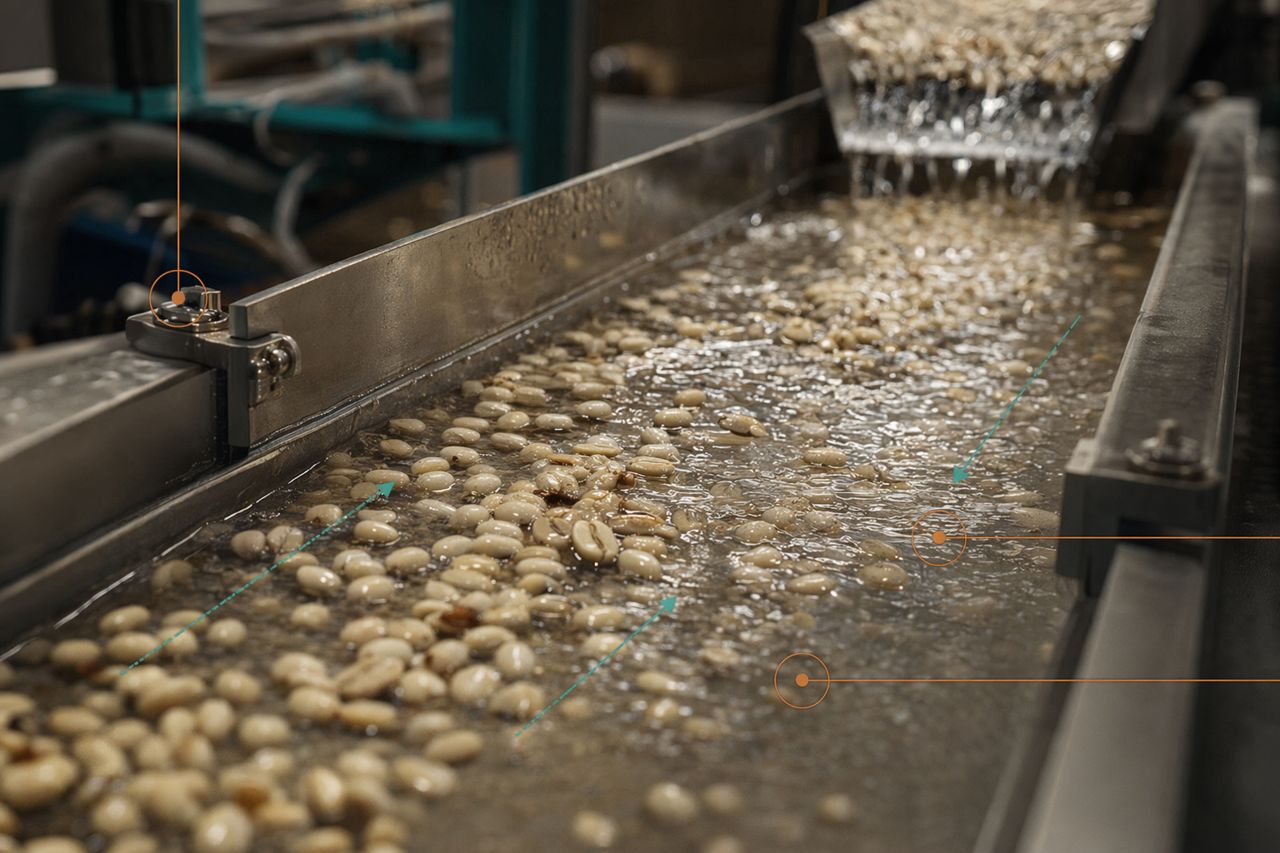
6. Washing and grading: verify removal, separation, and flow
Washing is both a cleaning step and a separation step. If it is overloaded, the plant may push partially cleaned parchment forward, increase water demand, or create inconsistent drying loads.
Key control points
- Washer feed rate
- Water flow stability
- Retained mucilage after washing
- Separation of light parchment and defects
- Solids accumulation in channels and screens
- Discharge uniformity
Operator checks
- Pull samples at washer inlet and outlet.
- Rub parchment by hand and compare to the site standard.
- Inspect wash water for excessive suspended solids.
- Check channel corners and low-flow areas for build-up.
- Confirm that grading channels are not being bypassed during peak load.
Process value
Stable washing reduces rework, lowers unplanned cleanouts, supports more consistent drying, and provides a clear quality gate before parchment reaches patios, raised beds, or mechanical dryers.
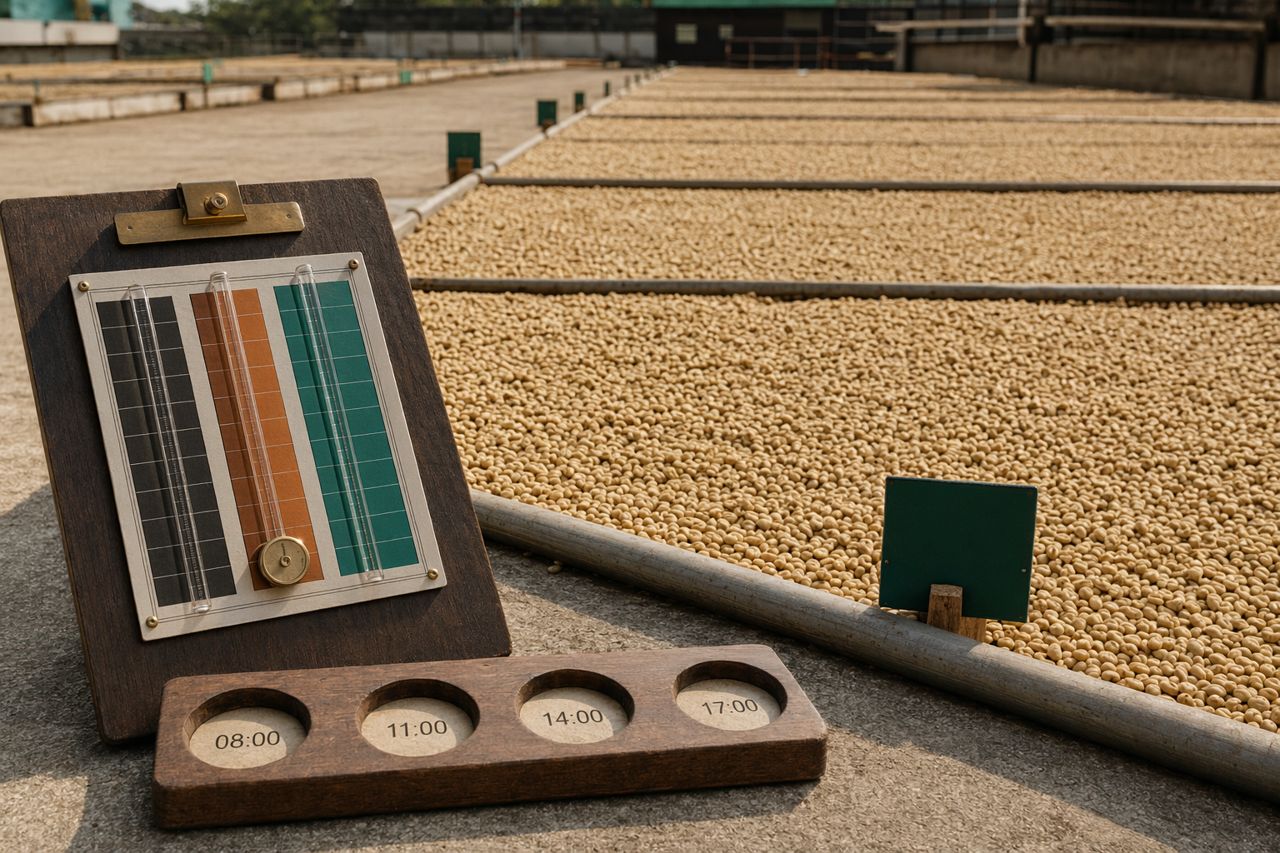
7. Drying handoff: do not send variability to the patio
Drying cannot fully correct upstream inconsistency. Mixed moisture, retained mucilage, and uneven layer depth create quality risk and scheduling problems.
Key control points
- Surface cleanliness of parchment
- Drain time before spreading
- Lot segregation
- Initial layer depth
- Patio, bed, or dryer assignment
- First-turn timing
- Weather or dryer availability constraints
Handoff checklist
- Confirm the lot ID physically follows the parchment.
- Avoid mixing lots with different fermentation histories.
- Drain excess surface water before spreading.
- Start with consistent layer depth for the drying method.
- Record drying start time and location.
- Communicate any upstream deviation to the drying team.
Practical note
A clean handoff between wet mill and drying crew is a commercial control point. It protects throughput planning, export quality targets, and customer confidence.
8. Cleaning, sanitation, and downtime prevention
Wet mill cleanliness is not only a hygiene concern. It affects viscosity, flow, microbial load, odor, and equipment reliability.
High-priority cleaning points
- Cherry receiving hoppers
- Floatation tanks and channels
- Depulper contact surfaces
- Fermentation tank corners and drains
- Washer screens and spray points
- Water recirculation sumps
- Pulp handling conveyors
Downtime reduction checks
- Remove stringy pulp residues before they compact.
- Inspect screens on a schedule, not only after blockage.
- Flush dead zones in channels.
- Keep spare wear parts for depulpers and pumps.
- Record repeated blockage locations and investigate root cause.
9. Records that make troubleshooting possible
Useful records are short, consistent, and close to the process. If data collection slows the line, operators will avoid it. If records are too vague, they will not support corrective action.
Minimum useful wet mill record set
- Lot identity and reception condition
- Floatation results
- Depulper settings and adjustment times
- Fermentation start and release times
- Temperature observations where used
- Mucilage removal observations
- Washing and grading notes
- Drying handoff time and location
- Deviations and corrective actions
Best practice
Link each deviation to a decision. For example: isolated batch, adjusted depulper, extended washing, changed tank assignment, increased cleaning frequency, or held lot for supervisor review.
10. A practical daily wet mill QC walk
Use this as a short supervisor route during active processing.
- Reception: Are lots identified, sorted, and moving without delay?
- Flotation: Is water separation stable and visibly clean enough for the lot class?
- Depulping: Is pulp separation clean without excessive parchment damage?
- Mucilage stage: Are time, temperature, and tactile release consistent with the site standard?
- Washing: Is the outlet parchment clean and uniform?
- Grading: Are light defects and low-density parchment being separated?
- Handoff: Is the drying team receiving a uniform, traceable lot?
- Cleaning: Are blockage-prone points being cleared before they interrupt flow?
- Records: Are deviations documented while they are still fresh?
When to bring in technical support
Bring in external technical support when the same wet mill problem appears across multiple lots or weeks, especially if it affects throughput, water demand, filterability, viscosity, fermentation time, or drying uniformity.
Parchline Catalytics supports coffee processors evaluating enzyme-based process improvements with practical validation planning, side-by-side trial structure, and documentation that processing managers can use in production reviews.
If your plant is comparing options or needs a controlled trial plan, use the on-site form to request a quote. We will help define the process target, operating constraints, and validation steps before recommending a supply approach.